If you have ever struggled with dark spots, uneven skin tone, or post-acne marks, you are not alone. Hyperpigmentation is among the most common skin concerns for women with melanin-rich skin — and it can be deeply frustrating, especially when products promise dramatic results but deliver very little. This guide cuts through the noise and gives you the honest truth about what causes hyperpigmentation, which ingredients work, and what to realistically expect.
What Is Hyperpigmentation?
Hyperpigmentation occurs when certain areas of the skin produce excess melanin — the pigment responsible for skin colour — leading to patches that appear darker than the surrounding skin. It is not a disease; it is a response. Your skin produces melanin as part of its healing and protective process, and in melanin-rich skin, this response tends to be more robust — which is why dark spots after acne, inflammation, or sun damage are so common and can be so persistent.
The Main Types of Hyperpigmentation
Post-Inflammatory Hyperpigmentation (PIH)
PIH is the dark mark left behind after a pimple, ingrown hair, cut, burn, or any other form of skin inflammation heals. The inflammation triggers melanocytes (melanin-producing cells) to go into overdrive. PIH is particularly intense in darker skin tones because there are more active melanocytes to begin with. The good news: PIH, unlike true scarring, is treatable.
Melasma
Melasma appears as larger, symmetrical patches of darkened skin — typically on the cheeks, upper lip, and forehead. It is strongly linked to hormonal fluctuations (pregnancy, oral contraceptives, hormonal IUDs) and UV exposure. Melasma is more stubborn than PIH and requires consistent, targeted treatment alongside strict sun protection. It can recur if triggers are not managed.
Sun-Induced Dark Spots (Lentigines)
Also called age spots or sun spots, these flat, well-defined patches appear on areas most exposed to the sun — face, hands, shoulders. They develop over years of cumulative UV exposure and are more common as we age. Daily SPF is the most effective prevention strategy.
Ingredients That Actually Work
Vitamin C (L-Ascorbic Acid)
One of the most well-researched brightening ingredients. Vitamin C inhibits the enzyme (tyrosinase) that triggers melanin production. It also acts as a powerful antioxidant that neutralises free radicals from UV exposure before they can trigger pigmentation. Look for concentrations between 10–20%. Note: Vitamin C is unstable and oxidises quickly — choose products in opaque or airtight packaging, and store in a cool, dark place. A good rule: if your Vitamin C serum has turned dark orange or brown, it has oxidised and is no longer effective.
Niacinamide (Vitamin B3)
Niacinamide does not inhibit melanin production but instead prevents melanin from transferring to the skin's surface. The result is visibly brighter, more even-toned skin over time. Niacinamide is also anti-inflammatory (helping to prevent new PIH from forming), pore-minimising, and strengthens the skin barrier. It is one of the safest and most universally tolerated brightening ingredients — excellent for sensitive skin.
Alpha Arbutin
A stable, gentle form of hydroquinone that inhibits tyrosinase activity. Alpha arbutin is effective at concentrations of 1–2% and is considered safe for long-term use, unlike hydroquinone (which requires breaks in treatment). It works well in combination with Vitamin C or niacinamide for enhanced results.
Kojic Acid
Derived from fungi during the fermentation of rice, kojic acid is a potent tyrosinase inhibitor widely used in lightening products across Asia and West Africa. It is effective but can be irritating at higher concentrations. Use at 1–4% and always pair with a good moisturiser to prevent dryness.
AHAs (Glycolic & Lactic Acid)
Alpha hydroxy acids work by accelerating skin cell turnover — shedding pigmented surface cells faster than they would naturally shed. Glycolic acid penetrates deepest and is most effective; lactic acid is gentler and better for sensitive skin. AHAs must always be followed by SPF, as they increase photosensitivity significantly.
Retinol / Retinoids
Vitamin A derivatives that dramatically speed up cell turnover, pushing pigmented cells to the surface and fading marks faster. Retinoids are among the most researched and effective anti-ageing and brightening ingredients available. Start slowly (2–3 nights per week) to allow skin to adjust — expect some initial purging, redness, and flaking. Always use SPF the morning after using retinol.
The Non-Negotiable: SPF, Every Single Day
Every brightening ingredient in the world is fighting a losing battle if you are not wearing SPF daily. UV exposure is the primary trigger and accelerator of all forms of hyperpigmentation. SPF does not just prevent new spots from forming — it is essential to allow existing spots to fade. Without it, your brightening serums are working against the sun every single day, and the sun almost always wins. Use SPF 30 minimum, SPF 50 ideally, every morning without exception.
Realistic Timeline
Hyperpigmentation takes time to treat — more time than most product marketing suggests. With consistent use of effective ingredients plus daily SPF, most PIH marks will visibly fade in 8–12 weeks. Melasma and deep spots can take 6–12 months of consistent treatment. Patience and consistency are the most powerful tools you have.
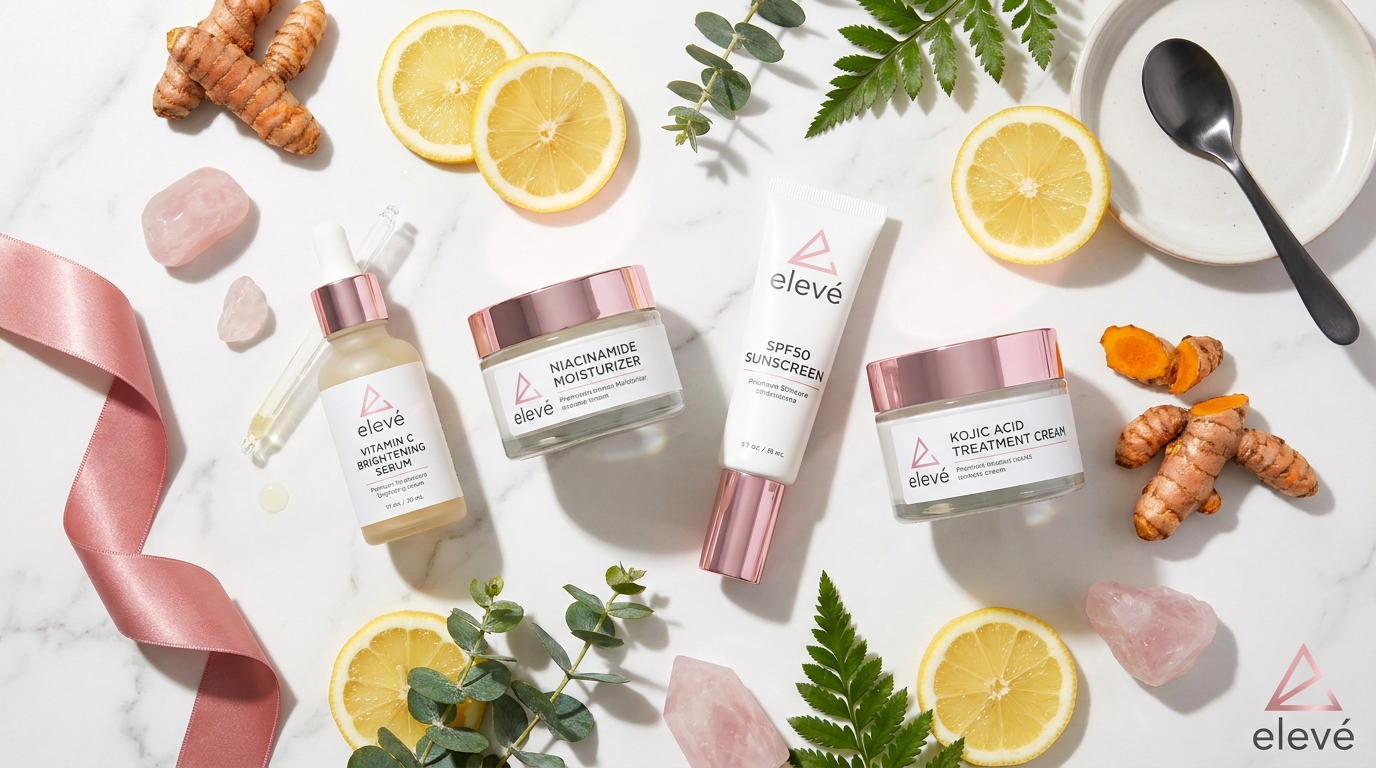
Start your dark spot journey: Our Vitamin C Brightening Serum and Kojic Acid Dark Spot Corrector Cream are formulated specifically for melanin-rich skin and work synergistically for faster results. Bundle them together in our Skincare Glow Bundle and save over GH₵135.